

A Harvard Graduate’s Library: History of Science
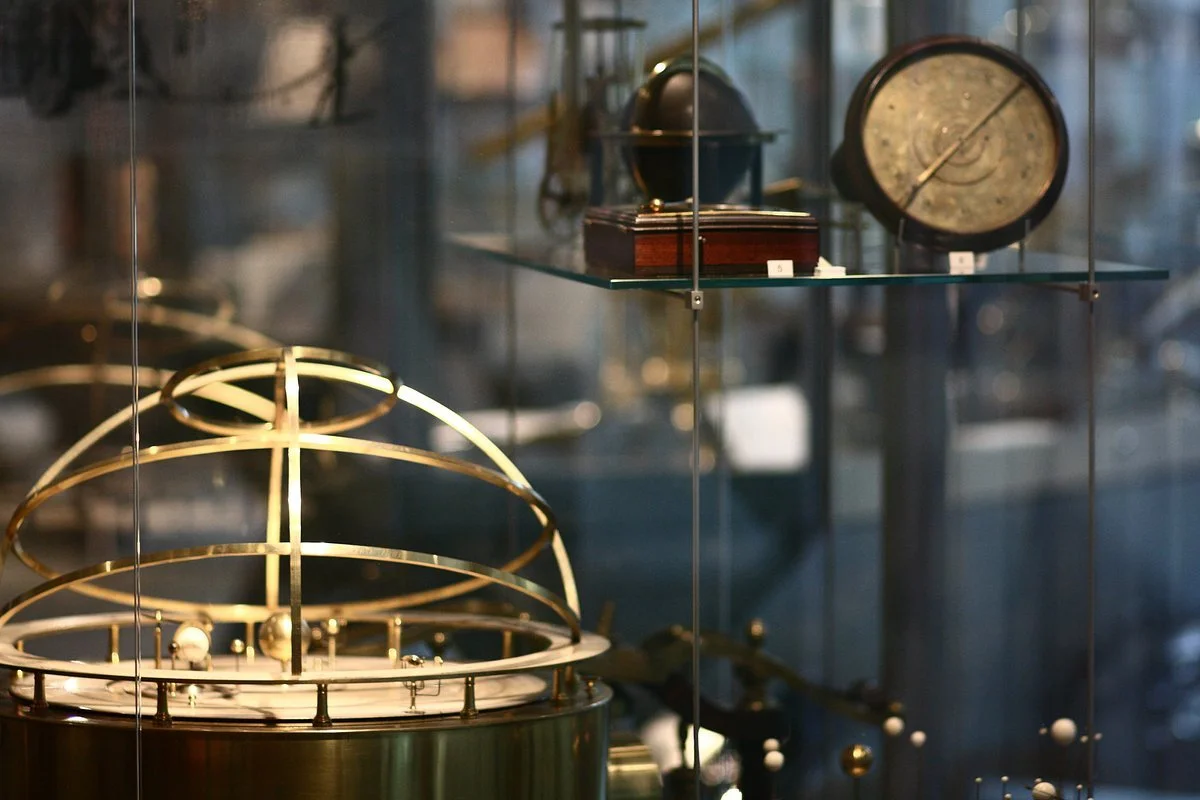
Harvard’s History of Science department has existed for nearly a century, preceding three of the most popular concentrations for the class of 2025: neuroscience, social studies, and computer science. This legacy, however, does little to mitigate the baffled looks – from the woman giving me my COVID booster, the person next to me at Lucy Dacus concert, my father’s coworker – I received when disclosing my major as a student. But in these moments of disconnect, I had the privilege of talking about what I believe is currently one of the most exciting and important academic approaches to the world.
What is science? Who gets to create it? How do scientists choose what to pursue? Naturally, such questions attract many “Pre-Med” and humanities students alike. I was fortunate enough to wander into Harvard’s HistSci department in my first year there, but I had limited prior exposure to the discipline. Thus, I have compiled a list of key books and articles from my HistSci academic experience at Harvard with the hope of exposing more prospective college students to an academic focus they might otherwise be unaware of.
It is worth noting that much of my academic pursuits centered around American history, particularly more recent history, hence the focus of my recommendations.
The History of Science Library is Now Open
The History of Science and the History of Knowledge (2017) by Lorraine Daston
Lorraine Daston’s 2017 piece, which I read in my junior tutorial, is a fascinating work for those new to and comfortable with the history of science alike. In her assertion that, “... it won’t do to … debunk the old narrative about the birth of modern Western science if there’s no new narrative to put in its place” (Daston 149), she captures the ongoing, near-cyclical efforts of historians to update their created narratives, particularly historians of science, continuously. Contemporary historians of science are currently undergoing a concerted effort to broaden our understanding of the history of science beyond Europe/Western science, continuously expanding who gets to “count” as a scientist and reassigning value to traditionally marginalized epistemologies. Yet, in this effort, historians must also contend with their own historically Eurocentric and colonial biases. Daston also proposes a shift towards defining HistSci as the history of knowledge, claiming the new label has the potential to rid itself of established expectations and associations. She comes to no hard conclusions; Daston’s piece merely seeks to discuss current assumptions across the HistSci landscape, thus serving as an excellent introduction to the discipline.
Inventing the Egghead: The Battle over Brainpower in American Culture (2013) by Aaron Lecklider
What is brain power? Who has it? What is its place in a society?
In his 2013 book Inventing the Egghead, Aaron Lecklider explores such questions, as well as widely accepted assumptions about intelligence and societal function. In particular, in the chapter “The Force of Complicated Mathematics: Einstein Enters American Culture” – read in my class on science & popular culture – Lecklider contemplates Einstein’s expansion past an individual human into a near-ubiquitous symbol of intellect. Through questioning our symbols and heroes, Lecklider questions how we define our nation and our own American identities. Is the pursuit of intelligence definitionally American in its ambition and independence? Or is it exclusionary against the masses, becoming “un-American” (Lecklider 57) in its appeal to the elites? Inventing the Egghead invites any reader to consider such questions, prompting one to question themself and the beliefs they so firmly hold.
Braiding Sweetgrass: Indigenous Wisdom, Scientific Knowledge, and the Teachings of Plants (2013) by Robin Wall Kimmerer
If academics like Lorraine Daston call for the “debunking” of the Eurocentric “old narrative,” works like Robin Wall Kimmerer’s Braiding Sweetgrass are the response. Kimmerer is a botanist who thoughtfully incorporates her membership in the Citizen Potawatomi Nation into her beautiful and seminal book. I first read portions of Braiding Sweetgrass in Harvard’s HISTSCI100, the introductory class for the department spanning antiquity to contemporary science. Kimmerer’s writing speaks to the possibility of Indigenous epistemologies co-existing alongside Western ones, directly opposing colonialist ideologies still pervasive today. Unlike other selections on this list, Braiding Sweetgrass is also compellingly personal; Kimmerer not only seeks to “braid” together indigenous and Western approaches, but she explores how that intertwining is possible in her own research. Through challenging herself to find such a balance, she challenges her larger society and traditional narratives to do the same.
The Gospel of Germs: Men, Women, and the Microbe in American Life (1999) by Nancy Tomes
In the wake of the COVID-19 pandemic, most people are, at this point, well acquainted with the way a microbe can completely reshape one’s life. Yet the immense social impact of microbes or “disease” in general far precedes COVID; in The Gospel of Germs, Tomes questions: “When and how did ordinary Americans come to believe in the existence of germs? … How did coming to believe in the existence of these invisible enemies change the way men and women lived their everyday lives?” (Tomes xiv). I first read Tomes’ writing during my junior year of college; I was in the process of writing a major research paper for my junior tutorial, in which I explored the social impacts of HIV/AIDS and how it affected people’s perception of disease as a concept. Tomes’ argument centers around the titular “gospel of germs,” which she defines as “the belief that microbes cause disease and can be avoided by certain protective behaviors” (Tomes 2). The book is less concerned with a governmental response to an outbreak – and practically unconcerned with the actual behavioral patterns of a microbe – and more with disease as a social phenomenon. When and why do we believe our behavior can overcome contagion? Where does this belief come from? And when/how does contagion become moralized? Tomes explores disease – not as motiveless microbes – but as a human struggle for the feeling of control, making The Gospel of Germs a must-read for laymen and prospective immunologists alike.
Excremental Colonialism: Public Health and the Poetics of Pollution (1995) by Warwick Anderson
Warwick Anderson’s “Excremental Colonialism” was my first exposure to the “dirty” side of the history of science (pun somewhat intended), and the reason I decided to concentrate in HistSci at Harvard. Originally published in the journal Critical Inquiry in 1995, the article eventually became a chapter in the larger 2006 book Colonial Pathologies: American Tropical Medicine, Race, and Hygiene in the Philippines. As the title implies, Anderson’s piece explores American colonialism in the Philippines through the lens of “hygiene” / “pollution” and waste management. “Excremental Colonialism” illuminates the ability to read social and historical influences into even the most mundane aspects of the natural world. Particularly in the Western post-COVID pandemic world, we have a tendency to understand cleanliness and hygiene as somewhat objective concepts; of course, we should make the spaces we exist in as clean as possible to avoid disease and pollution. However, Anderson questions the potential for authoritarian and imperial motives within such avenues. What gives one group, in this case 20th-century America, the right to unequivocally assert that they know what is best for the public health of a different population (the occupied Philippines)? How has public health been co-opted to serve agendas of domination?
This piece was hugely impactful to me when I first read it as a freshman. Anderson’s anti-colonialist considerations showed me that there was room in every aspect of society to question social implications and assumptions – even down to how we get rid of our own waste. I cannot recommend this read enough to those interested in the history of science.
Make Your Own Job: How the Entrepreneurial Work Ethic Exhausted America (2025) by Erik Baker
A bit of a biased pick, I will admit; Erik Baker was my much beloved thesis advisor, and I support the spread of his work by any means necessary. Regardless of personal skew, Baker’s exploration of “success” and the pursuit of personal opportunity as recent developments of course appeals to working adults, but it also forms the perfect intellectual landscape for any high school students in the throes of academic grind. When reaching out to Baker for additional thoughts, he recommended the book particularly for high school students; particularly in the process of college applications, for many students who may already feel innate pressures “to develop their entrepreneurial abilities, [Make Your Own Job] can offer them a way to understand where those pressures come from and why they're worth interrogating.” In parallel with pieces like The Gospel of Germs and Excremental Colonialism, Baker’s book calls upon its readers to question the beliefs and phenomena we have so readily accepted as “the way things are.” Much like the title suggests, Baker’s hopeful contemplations call upon us to find our own definitions of success.

Jess Hung serves as our Interdisciplinary Admissions Consultant and History Specialist, holding a degree in History and Science from Harvard University.
